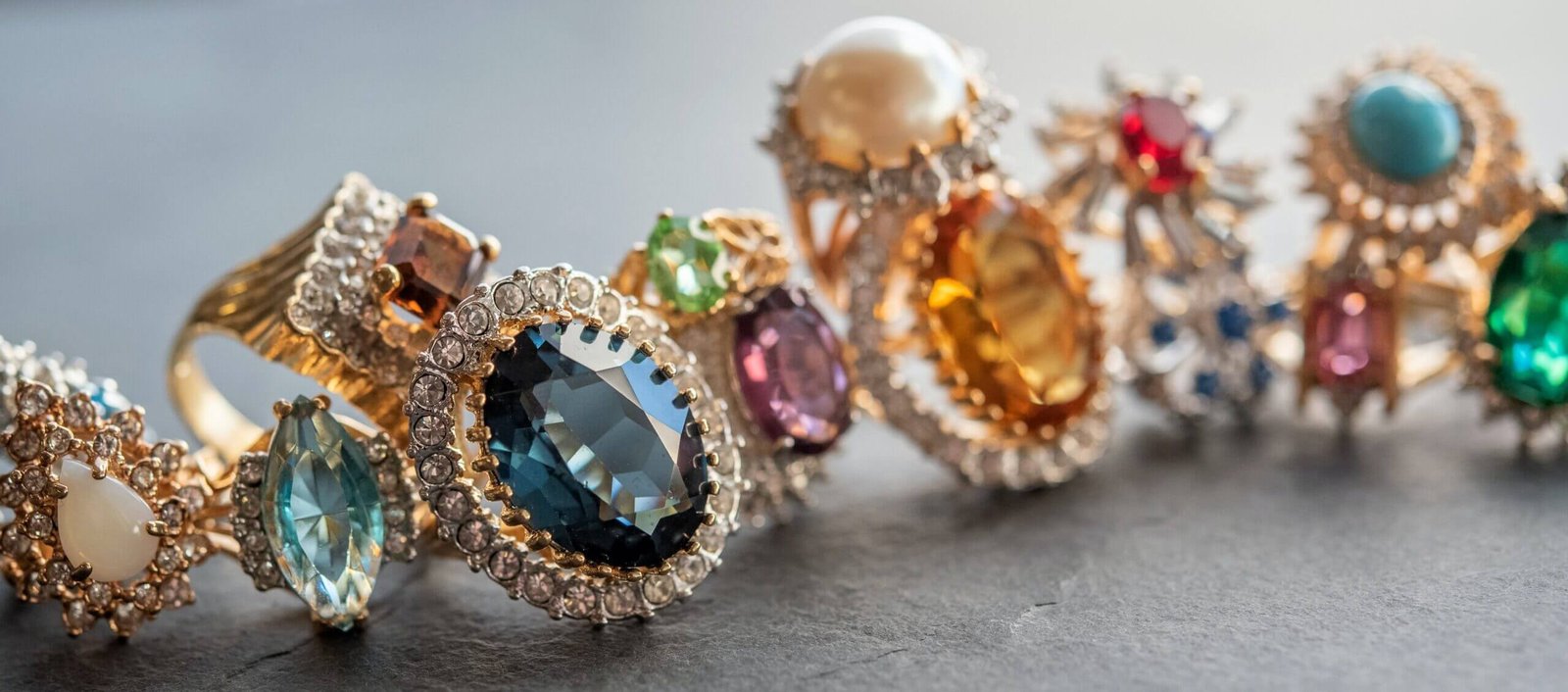
Have you ever read a passage in the Bible that mentions “sapphire” and pictured the gem on your own hand, only to realize that the Bible’s sapphire might not be what you think it is?
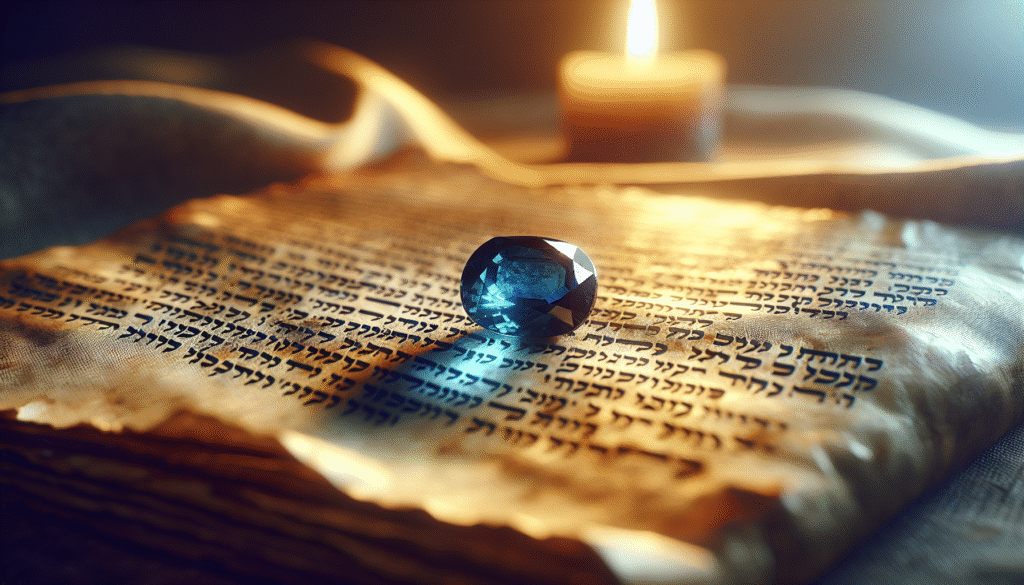

What Color Is Sapphire In The Bible?
You’re about to get comfortable with a subject that looks simple until you look closely: the word “sapphire” in English Bibles masks a variety of ancient meanings and visual impressions. Depending on language, time, place, and the translator’s imagination, biblical “sapphire” can mean a deep royal blue, a sky-blue stone, a greenish-blue, or even what modern gemology would call lapis lazuli. You’ll find that the Bible’s language is as much about metaphor and memory as about mineralogy.
Language: The Words Behind “Sapphire”
You’ll find that what English Bibles call “sapphire” comes from two main streams: the original Hebrew and later the Greek of the Septuagint and New Testament. Each carries its own history and baggage.
- Hebrew: sappir (סַפִּיר). This is the common Hebrew term that translators rendered as “sapphire” in many English versions. The term appears in contexts such as the high priest’s breastplate and poetic descriptions of God’s throne.
- Greek: sappheiros (σάπφειρος). The Septuagint and New Testament sometimes use this Greek form, which influenced Latin and later European terminology (sapphirus, saphir).
- Latin and medieval usage further spread the idea of a blue stone, with classical authors and medieval lapidaries offering assorted descriptions that translators leaned on.
You’ll want to remember that words for gems in ancient languages were not strict scientific labels. They were loose, poetic, and shaped by trade and fashion.
Table: Biblical Terms and Their Modern Interpretations
| Ancient Term | Script | Typical English Rendering | Modern Likely Identification |
|---|---|---|---|
| sappir | סַפִּיר | sapphire | lapis lazuli or blue corundum (context-dependent) |
| sappheiros | σάπφειρος | sapphire | retained as “sapphire”; ambiguous between lapis and corundum |
| other descriptive phrases | — | “blue as the sky,” “like the heavens” | color descriptors rather than mineral IDs |
You’ll use this table as a cheat sheet: the same ancient word can point at different modern stones depending on context.
Where the Bible Actually Mentions Sapphire
You’ll notice “sapphire” appears in several striking places—often in descriptions meant to convey divine majesty, cosmic order, or precious value. Here are the most notable biblical contexts and what they imply.
Exodus and the Covenant Scene
In scenes connected with Moses—where the mountain, covenant, and law meet—you’ll encounter imagery of a pavement or a surface “like sapphire.” The choice of sapphire as a simile pushes you to picture a sky-like, radiant blue support underfoot, as if God’s presence set the world on a gem-studded platform.
The High Priest’s Breastplate (Hoshen)
You’ll read about the priestly breastplate, studded with twelve precious stones. “Sapphire” is one of the stones listed in many renderings, used to represent one of the tribes. Here the word functions as part of a prestigious inventory: precise color was less important than the notion of preciousness and tradition.
Prophetic Thrones and Visions (Ezekiel, Revelation)
Prophetic literature uses gem imagery to convey transcendence. Ezekiel’s throne is described in terms that translators render as “sapphire,” giving you an image of a throne carved of deep blue stone. Similarly, the New Testament’s apocalyptic visions include foundation stones that translators call sapphire, emphasizing heavenly architecture over mineral classification.
Wisdom and Poetry (Job, Proverbs)
Poets and sages compare wisdom to precious stones. When “sapphire” appears in poetic texts, it’s doing rhetorical work—signaling beauty, rarity, and value rather than offering lapidary identification.
Table: Selected Biblical Passages (Contextual Summary)
| Passage (Book) | Context | Typical Translation | What It Conveys |
|---|---|---|---|
| Exodus 24 | Mountain and covenant | “pavement like sapphire” | Heavenly or divine majesty |
| Exodus 28 | High priest breastplate | “sapphire” (one stone) | Sacred symbolism, tribal representation |
| Ezekiel 1 | Vision of the throne | “as the colour of sapphire” | Transcendent glory |
| Job 28 | On wisdom and ores | “the sapphire of the sea” | Beauty and rarity |
| Revelation 21-22 | New Jerusalem foundations | “sapphire” among foundations | Heavenly perfection |
You’ll see from these contexts that sapphire is as much about theological effect as about geology.
Did Biblical “Sapphire” Mean Modern Sapphire?
You’ll find the urgent question is not just “what color” but “which mineral?” Modern “sapphire” is corundum (aluminum oxide) with trace elements producing blue hues. Ancient people, however, often used the word for different blue stones, primarily lapis lazuli.
Lapis Lazuli vs. Corundum
You’ll want to compare lapis and corundum to see why confusion exists.
- Lapis lazuli: A rock primarily composed of lazurite, often with visible flecks of pyrite (gold-colored) and calcite veins. It tends to be an intense ultramarine or deep royal blue, often with mottled gold highlights. Historically sourced from Afghanistan (Badakhshan), it was prized in the ancient Near East and widely used for jewelry, seals, and pigments (ultramarine).
- Corundum (modern sapphire): A mineral with exceptional hardness (9 on Mohs scale) and a pure, velvety, often transparent blue when of gem quality. Historically important sources include Sri Lanka and later deposits in Kashmir and Myanmar. Corundum produces clear, refractive gems rather than opaque, richly pigmented slabs.
You’ll note these differences immediately if you’ve ever compared a carved lapis amulet to a faceted blue sapphire engagement ring. One is opaque and painterly; the other is clear, hard, and refractive.
Why Ancient “Sapphire” Was Often Lapis
You’ll find several good reasons why ancient translators and writers often meant lapis when they said “sapphire”:
- Availability: Lapis lazuli was accessible to the ancient Near East via trade routes from Afghanistan and had a long history of use in Egypt and Mesopotamia.
- Appearance: Lapis’s deep blue and striking gold flecks made it a perfect candidate for poetic imagery of the heavens.
- Historical usage: Ancient seals, inlays, and carved objects commonly used lapis, which may have informed the terminology.
You’ll realize that even if a later translator imagined a clear blue corundum, the people on the ground in the biblical world might have been looking at a lump of lapis.

Color Descriptions in the Biblical Texts
You’ll find the Bible rarely gives a gemology report. Instead, it offers similes: “like the heavens,” “like the sky,” “as the colour of sapphire.” Those phrases are about hue and effect, not refractive index.
- “Like the heavens” or “sky-like blue” tends to indicate a bright, open blue—what you might call azure.
- “Deep like the sea” leans toward ultramarine or royal blue, the visual territory of lapis.
- Some passages add modifiers that suggest brilliance, sparkle, or even metallic speckling—clues that point to lapis with pyrite inclusions rather than a clear corundum gem.
You’ll find poetic language emphasizes how the stone communicates divinity and permanence, not the technicalities of mineralogy.
Translation History and Its Consequences
You’ll discover that translations have shaped your mental gem cabinet. The Septuagint (the Greek translation of the Hebrew Scriptures) used sappheiros; Jerome’s Latin Vulgate followed classical terms, and English translations such as the King James stuck with “sapphire.” Over centuries, European readers who had access to clear gem-quality corundum may have superimposed their visual experience onto the biblical term.
- Medieval lapidaries: These were books that described gems and their supposed virtues. They often conflated different blue stones, which further muddied the waters.
- Modern translations: Some contemporary Bibles prefer “lapis lazuli” or “blue stone” when the context and scholarship favor that identification.
You’ll want to remember: translation is an act of interpretation. When a scholar writes “sapphire,” she isn’t always making a definitive gem ID; she’s translating history, metaphor, and material culture into a single modern word.
The Mineralogical Differences You Should Know
You’ll find it helps to understand a few hard facts so you can tell lapis from sapphire at a glance—if you’re not wearing a jeweler’s loupe.
- Hardness: Corundum (sapphire) rates 9 on Mohs scale; lapis is softer (about 5–6).
- Transparency: High-quality sapphire is transparent to translucent; lapis tends to be opaque.
- Inclusions/Appearance: Lapis has a matte, flecked look with pyrite specks; sapphire has internal reflections and a glassy luster.
- Color range: Sapphires come in a wide range (blue, pink, yellow, padparadscha), whereas lapis is almost exclusively blue to bluish-green.
You’ll find these differences are not just for scholars: they affect how the stone wears, how it’s polished, and what jewelry it becomes.
Geographic Sources and Trade
You’ll realize that where stones came from influenced what people called “sapphire.” If a region regularly imported lapis from Afghanistan, their “sapphire” would likely be lapis.
- Lapis lazuli sources: Badakhshan (Afghanistan) was the primary ancient source for the Near East. You’ll see lapis appearing in Egyptian tombs and Mesopotamian artifacts.
- Corundum (sapphire) sources: Sri Lanka supplied gem-quality corundum to the ancient world, though the trade patterns and relative rarity meant it wasn’t as ubiquitous as lapis in some Near Eastern contexts.
- Trade routes: Caravans and seafaring traders shuffled gems and their names across cultures. You’ll find the same stone called different names depending on intermediary languages and local classification.
You’ll see trade histories are as much about human movement as geological deposits.
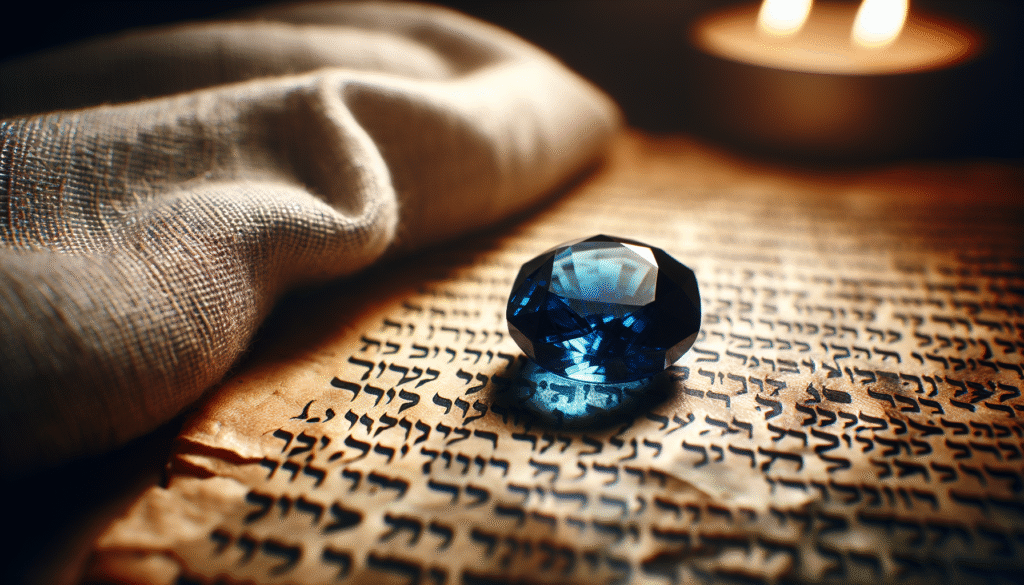
Symbolism and Why Color Matters in Biblical Imagery
You’ll notice color in the Bible is rarely neutral. Blue stones signal several overlapping meanings.
- Divine presence: Blue evokes the heavens. A throne or pavement described as sapphire conjures celestial connection.
- Purity and covenant: Blue as a sign of trustworthiness, order, and the eternal—appropriate for covenants and the law.
- Royalty and honor: Blue stones, like other precious gems, express wealth and status.
- Protection and wisdom: In poetry and wisdom literature, precious stones, including blue ones, symbolize rare knowledge and moral worth.
You’ll remember that color does symbolic heavy lifting in biblical rhetoric; it’s less about inventory and more about meaning.
How Modern Readers and Jewelers Differ
You’ll notice a modern jeweler will show you a faceted blue corundum and call it sapphire with emphasis on cut, clarity, and carat. A biblical scholar will show you an ancient seal or inlay and describe deep, pigmented lapis. Both are correct in their frames.
- For jewelry: “sapphire” refers to specific gemological properties.
- For biblical studies: “sapphire” might be shorthand for a culturally significant blue stone, often lapis.
You’ll benefit from switching frames depending on your goal—shopping for an engagement ring or reading Ezekiel’s vision.
Quick Reference: Stones, Colors, and Clues
You’ll find this small table handy when you’re reading and want to guess what the original might have been.
| Clue in Text | Likely Stone | Color Clues |
|---|---|---|
| Deep, opaque, gold-specked imagery | Lapis lazuli | Intense ultramarine with pyrite flecks |
| Clear, jewel-like, refractive, faceted | Sapphire (corundum) | Transparent deep blue |
| Simile: “like the heavens” or “like the sky” | Color descriptor (could be lapis or corundum) | Azure to deep blue |
| Priestly inventory or poetic metaphor | Could be generic “blue gem” term | Emphasis on value, not mineralogy |
You’ll find this helps you avoid overconfident assertions like “the Bible clearly means modern sapphire.”
Common Misconceptions Corrected
You’ll want to set down a few myths that tend to circulate.
- Myth: “Sapphire in the Bible is always the same as modern sapphire.” Correction: The ancient term is flexible and often refers to lapis.
- Myth: “Translators intentionally misled readers.” Correction: Most were working with limited information, established usage, and the visual vocabulary available to them.
- Myth: “Color descriptions are scientific.” Correction: Biblical color language is poetic and symbolic, not a lapidary catalogue.
You’ll see that myths usually come from conflating modern gem knowledge with ancient descriptive practices.
How to Read Biblical References to Gems Like a Pro
You’ll find that a little method goes a long way when you encounter gemstones in biblical texts.
- Read the context: law, poetry, vision—each has its own conventions.
- Check the original language: a term may have broader or narrower usage than the English word suggests.
- Consider archaeology: what stones were present in the region and time?
- Consult translation notes: many modern translations note when lapis is a better fit.
- Keep symbolism in mind: gems often mean more than their physical attributes.
You’ll be better armed to interpret a passage when you bring both a jeweler’s eye and a reader’s sensitivity to metaphor.
Practical Example: Interpreting Exodus’s “Pavement Like Sapphire”
You’ll probably have a picture in your mind of Moses treading on gem-studded ground. If you read it with the method above, you’ll notice:
- Context is prophetic and ritual, not gemological.
- Hebrew term suggests a blue stone; lapis was regionally common and symbolizes the heavens.
- The visual effect intended is blue brilliance and permanence—an image any radiant blue stone could supply.
You’ll conclude that the point isn’t to tell future gemologists what composes the mountain but to evoke a holy, sky-like radiance.
Modern Translation Choices and Why They Matter to You
You’ll notice modern translations sometimes read “lapis lazuli” instead of “sapphire,” showing how scholarship has refined identification. When a translator chooses lapis, they’re signaling an awareness of ancient Near Eastern trade, archaeological finds, and the material culture of the biblical world. If you prefer the poetic resonance of “sapphire,” that’s a defensible literary choice—just be aware of the nuance you’re accepting.
You’ll find these choices influence how you visualize biblical scenes, imagine theological metaphors, and even how artists represent scripture.
Why You Should Care
You’ll find it delightful and useful to know whether biblical “sapphire” is likely corundum or lapis, because it affects:
- How you visualize sacred narratives.
- How you understand ancient trade and luxury.
- How you read symbolism in sermons, art, and literature.
You’ll also find it curiously satisfying to correct someone confidently asserting that the Bible describes modern gemstones with modern names.
Final Thoughts
You’ll leave this reading with a flexible sense: biblical “sapphire” is primarily a poetic and symbolic term indicating blue—often the intense blue of lapis lazuli more than the transparent corundum you might buy as a sapphire ring. The language of the Bible is vivid, traduced through centuries of translators and traders whose lives and aesthetics shaped the words we read. When you next encounter “sapphire” in a passage describing heaven, throne, or covenant, you’ll have enough background to picture either a polished blue rock flecked with tiny gold stars or a faceted blue gem catching the light—both images are valid, and both say something true about how ancient people used color to speak of the divine.
You’ll also find a small pleasure in knowing that stones carry stories: trade routes, linguistic accidents, devotional metaphors, and human taste. Whether you prefer the opaque painterliness of lapis or the transparent brilliance of corundum, the Bible’s use of “sapphire” invites you to imagine a world where color itself is a language of meaning.