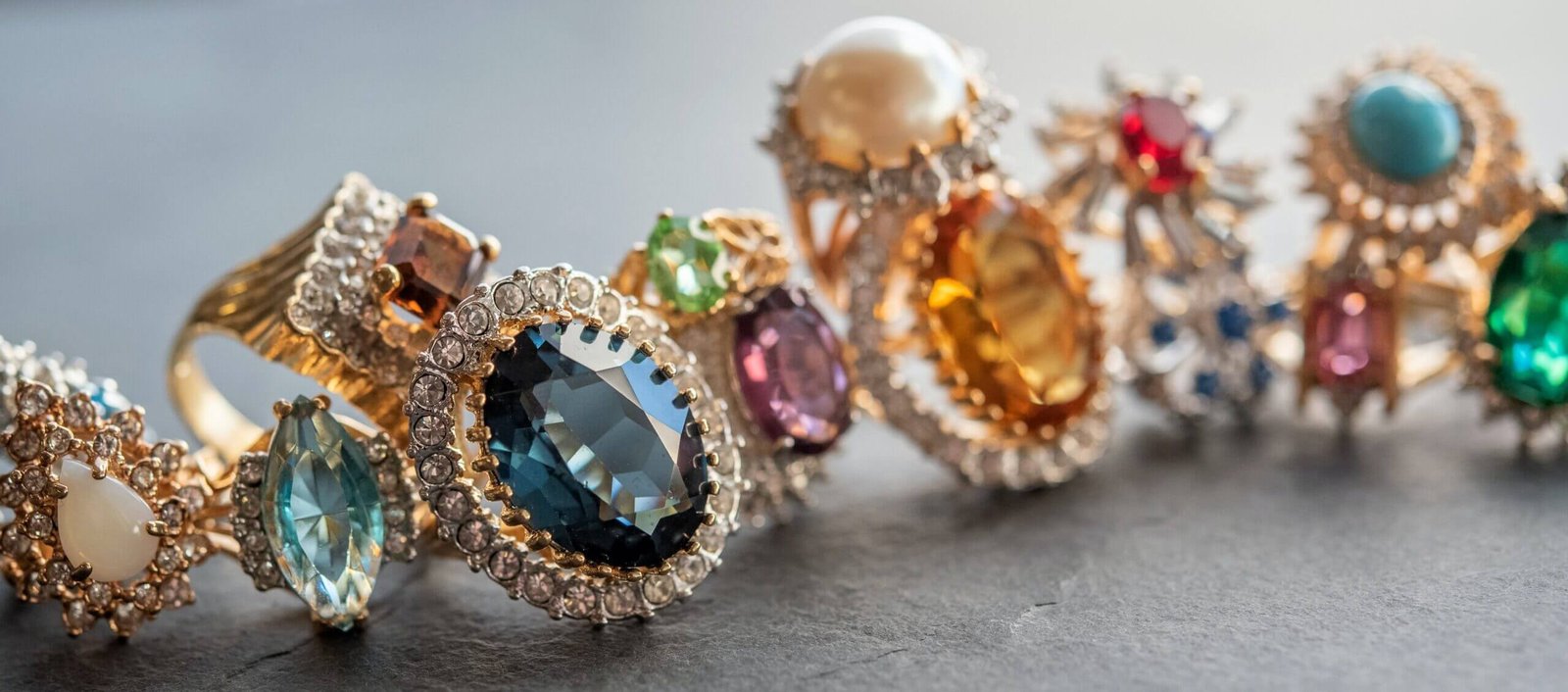
?Have you ever found yourself staring at a shelf of glittering stones, certain that one tiny, banded rock must be more precious than your college tuition because its color looks slightly more melancholy than the others?

What Is The Rarest Color Of Agate?
You probably expect a single, neat answer: a color stamped with rarity like a limited-edition sneaker. The truth is messier, more opinionated, and deliciously geological. Agate is a form of microcrystalline quartz with banding and patterns that make every specimen a tiny, icy landscape. The color you prize depends not only on chemistry and formation, but on geography, market trends, treatments, and, frankly, what you decide to call “rare.” If you’re hunting for the rarest natural color, your best bet is purple (true violet) and some shades of natural blue and green. But a strict ranking requires nuance. Below you’ll find why violet commonly tops lists, why some “rare” colors are often the result of dyeing, and how to tell natural from treated specimens when you bring a would-be treasure home.
How to read this: what you’ll get from this article
You’ll learn what causes agate colors, the colors that are genuinely uncommon, how treatments affect rarity and value, where unusual colors come from, how to spot dye and treatment, and practical tips for buying and caring for rare agates. You’ll also get a few slightly embarrassing anecdotes about jewelers and your inability to say “no” to a particularly persuasive vendor.
A brief primer on what agate is
You know quartz. Agate is quartz’s fussy, finely banded cousin. It’s chalcedony — microcrystalline silica — organized in rhythmic layers that can trap impurities and inclusions. Those trapped guests are what give each layer its color, from soot-gray to sunset red. You don’t need to memorize the chemistry, but it helps to know that agate forms in cavities in volcanic rock or ancient sediments, and the banding comes from successive deposits of silica at slightly different times and conditions.
You should imagine a volcanic bubble as a tiny multiroom apartment. Over time, silica-rich water slowly seeps in and deposits layer after layer of microscopic quartz. Trace elements, tiny bits of mineral, and microscopic voids or gas pockets create the color, opacity, and patterns you see.
What makes a color “rare” in agate?
“Rare” is part geology, part market. From a geological standpoint, rarity means the trace elements or conditions needed to produce a given hue occur infrequently in the rock environments that form agate. From a market perspective, rarity is also shaped by supply, demand, and whether the color has been artificially produced for decades.
Two things generally make a color rare:
- The elemental or mineral impurity required to produce that hue is scarce in agate-forming environments.
- The conditions that preserve that color over geologic time are uncommon.
You need both. Copper may produce green or blue in some minerals, but copper-bearing agates require the right source rock, correct temperature and pH conditions, and time without later alteration. If any of those factors are missing, you won’t get that color naturally.
Which agate colors are most commonly seen?
You’ll run into these colors most often in shops and shows:
- White, gray, and translucent: common because pure silica can be colorless or milky.
- Brown and tan: common due to iron oxides.
- Orange and red (carnelian-like): relatively common in areas with iron staining.
- Black and very dark gray: frequent when organic matter or iron/manganese fills pores.
- Patterned banding in combinations of the above: very common.
What you won’t commonly find naturally are vivid blues, true violets, and certain greens. Next sections explain why.
The rarest natural color: purple (true violet)
If you want a single answer to the titular question, say purple — but be careful. You’re probably thinking of amethyst when you hear “purple quartz.” Amethyst is indeed purple quartz, but true purple agate — chalcedony with natural violet tones in its banding — is exceptionally uncommon. When you do find violet in agate, it may occur as subtle lavender bands or as color influenced by inclusions rather than uniform colorization.
Why purple is rare:
- The trace elements that yield purple hues in quartz (like iron in specific valence states and structural defects) usually produce amethyst, not microcrystalline chalcedony. The crystal structure differences between macrocrystalline amethyst and the microcrystalline fibers of chalcedony make purple less likely in banded agate.
- Purple is often introduced commercially through dyeing. That trend started because consumers loved the bright colors and because the dyeing process is simple and effective.
So when you see a purple agate, you should be skeptical — and pleasantly surprised if your specimen is verified natural.
Very rare: certain blues and greens
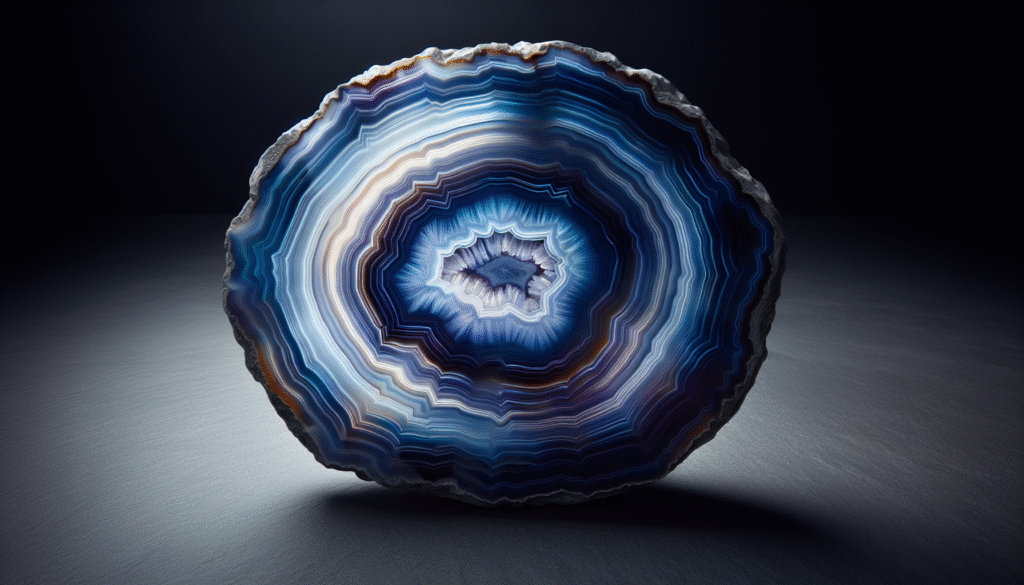
Next in line for rarity are truly natural blues and greens. You’ve probably seen plenty of “blue agate” in jewelry, but that’s often dyed. Genuine blue or green in agate typically arises from:
- Microscopic inclusions of minerals such as celadonite or chlorite (green), or
- Scattering effects in fine-grained chalcedony (blue), or
- Trace copper in very unusual situations (green or blue-green).
Why they’re rare:
- Green-producing minerals like chlorite must be present and preserved during growth; they often undergo alteration.
- Natural blue chalcedony exists, but the vivid blue often seen in the market is enhanced.
- Market demand for blue/green created an industry of dyeing pale agates, which obscures how uncommon the natural colors truly are.

Other unusual colors and special cases
Several other color phenomena are rare and interesting:
- Pink: natural pink chalcedony does occur, but it’s less common than dyed pink. Some pinks are due to trace manganese or organic residues, but many are dyed.
- Fire agate colors and iridescence: Fire agate isn’t a “color” per se; it’s a structural iridescence produced by layers of iron oxide. It’s rare and prized for the play-of-color, similar to labradorite’s schiller, and it commands high prices.
- Black and metallic sheens: Some agates have botryoidal inclusions of iron or manganese oxides that create striking effects. These aren’t “rare” in color but can be rare in form.
Table — Common agate colors and their relative rarity
| Color | Typical cause | Relative rarity (natural) | Commonly dyed/treated? | Typical localities |
|---|---|---|---|---|
| White/gray/translucent | Pure silica or fine porosity | Common | Rarely | Worldwide |
| Brown/tan | Iron oxides | Common | Sometimes | Brazil, India |
| Red/orange (carnelian) | Iron staining | Common to moderate | Sometimes | Brazil, India, Mexico |
| Black/dark gray | Organic matter, Mn/Fe oxides | Common | Sometimes | Worldwide |
| Pink | Trace elements, rare organics | Uncommon | Often dyed | Limited natural sources |
| Blue | Fine-grained scattering, inclusions | Uncommon | Often dyed | Namibia (blue lace agate), Madagascar |
| Green | Chlorite, celadonite, or other inclusions | Uncommon | Often dyed | Limited occurrences |
| Purple/violet | Rare structural/trace defects | Very rare | Very often dyed | Very limited natural records |
| Iridescent “fire” | Layered iron oxides causing interference | Rare | Not usually dyed | Mexico (fire agate), USA (AZ, NM) |
You’ll notice that dyeing is a recurring theme. For collectors, identifying natural color is crucial.
Why dyeing and treatments skew “rarity”
You should know that many agates are dyed to produce marketable colors: blues, greens, violets, and pinks are frequent targets. Dyeing started as a way to make otherwise unremarkable material more attractive, and it’s easy and cheap. Common methods include:
- Soaking in aniline dyes followed by heat treatment.
- Bleaching to remove natural color and then re-staining.
- Irradiation and heat to alter tones (more common for overall chalcedony).
The impact: dyed agates are not rare, but natural ones in the same hues are. What that means for you is: don’t assume rarity simply because the color looks unusual. Ask questions and examine specimens carefully.
How to tell if an agate color is natural or treated
You’re at a fair, a dealer’s table, or your cousin’s basement where someone insists a slab “just came back from Brazil.” How do you tell real from fake? Here are practical tests and observations:
- Visual inspection under magnification: look for color concentrations in cracks, pores, and along fractures. Dye collects in these spots. Natural color tends to be more consistent through the matrix.
- Color distribution in cross-section: if the color is unnaturally uniform or occupies only the outer edges, suspect dye.
- Solvent tests (with caution): acetone or alcohol on an inconspicuous area or a cotton swab can sometimes remove surface dyes. Do this only when you own the piece or the dealer allows it.
- UV light: some dyes fluoresce under ultraviolet; natural color rarely shows the same fluorescence patterns. This test is not definitive but helpful.
- Heat test: heating an agate can cause dyed colors to fade. Don’t do this unless you are willing to risk the stone.
- Professional lab testing: for a valuable piece, a gemological lab can give you a definitive answer using spectrometry.
If you want to keep things practical and unscholarly, bring a loupe and a suspicious streak of skepticism. Ask the seller whether the stone is dyed; reputable dealers will know and disclose it.
Why purple agates often command collector premiums
When you do find a genuinely purple agate, expect attention. Natural purple chalcedony is rare because the conditions that create violet hues in microcrystalline quartz are scarce. Collectors pay more for:
- True natural color (documented origin or lab certificate).
- Deep saturation combined with fine banding or dramatic patterns.
- Material from famous or limited localities.
You’ll want provenance because it’s the difference between “pretty rock” and “museum-grade curiosity.”
Famous types and localities that produce unusual colors
Some localities are associated with specific colors or exceptional specimens. These locales influence market perceptions of rarity.
- Laguna agate (Mexico): known for vivid red, orange, and intricate banding. Extraordinary specimens can be very valuable.
- Botswana agate (Botswana): famous for delicate banding in pink-gray-brown shades. Not rare, but highly prized for pattern and quality.
- Blue lace agate (Namibia): known for sky-blue bands; genuine specimens exist but are often imitated or dyed.
- Fire agate (Mexico, Arizona): prized for iridescent play-of-color; rare and treated as a distinct variety.
- Idar-Oberstein (Germany historical): renowned historically for agate cutting and trade. Many roughs from elsewhere were brought there for lapidary work.
You should understand that “rare” can mean “geologically scarce” or “rare in collectors’ markets” — the latter often correlates with localities that produce only a little material of a certain color.
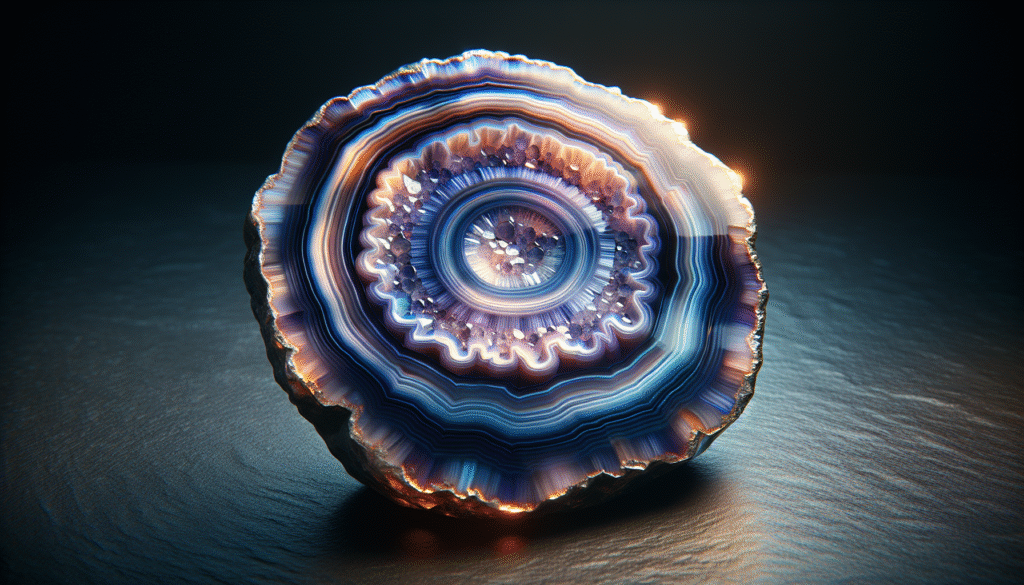
Table — Color vs. treatment likelihood and collector value
| Color | Likelihood of natural occurrence | Likelihood of dye/treatment | Collector interest/value (natural) |
|---|---|---|---|
| White/gray | Very high | Low | Low to moderate |
| Brown/tan | High | Moderate | Moderate |
| Red/orange | Moderate | Moderate | Moderate to high |
| Pink | Low | High | Moderate to high (if natural) |
| Blue | Low to moderate | High | High (if natural) |
| Green | Low | High | High (if natural) |
| Purple | Very low | Very high | Very high (if natural) |
| Fire/iridescent | Low | Low | Very high |
If you’re buying to display or invest, insist on documentation when colors are uncommon.
How agate color influences jewelry design and fashion
You’ll notice trends: bright dyed agates show up in mass-market jewelry, while subtle natural tones appear in artisanal and bespoke pieces. Designers choose colors for wearability: blues and pinks might complement current fashion lines, while natural violet agates become signature stones for exclusive collections.
From a practical standpoint:
- Dyed agates are fine for fashion jewelry: they’re inexpensive and colorful.
- Natural rare colors are better for heirloom or collectible pieces because their value and uniqueness are more stable.
If you love color for color’s sake, dyed agate can be joyful and wallet-friendly. If you love geological oddities, chase natural colors and document provenance.
Caring for rare agates
You probably don’t want to ruin the iridescence on your fire agate or the subtle lavender of a rare violet specimen. Basic care tips:
- Avoid prolonged exposure to sunlight if the piece is dyed; photosensitive dyes can fade.
- Clean gently: warm water, mild soap, and a soft brush work for most agates.
- Avoid harsh solvents on precious specimens; they can remove dye or alter the finish.
- Store separately to prevent scratches; agate ranks 6.5–7 on Mohs hardness, so it can scratch softer materials and be scratched by harder ones.
If you’re particularly attached, consider a soft cloth bag and climate-stable storage.
Pricing and investment considerations
You’re probably wondering: how much is a rare color worth? Prices vary widely based on size, clarity, banding, and provenance. General rules:
- Dyed agates: inexpensive, often sold by the gram or centimeter.
- High-quality banded agates (Botswana, Laguna): moderate to high, especially for finished cabochons.
- Genuine purple, blue, or green agates with verified natural color: premium prices, especially if combined with fine patterns.
- Fire agate: significant premiums for large, iridescent pieces.
Market trends can be quirky. A color that’s “in” can spike demand (and price), but it can also lead to a flood of dyed imitations.
Ethical and environmental considerations
You should know where your stones come from. Mining can be labor-intensive and sometimes exploitative. Ask sellers:
- Where was the material sourced?
- Was it mined responsibly?
- Did the miners or communities receive fair compensation?
Some agate sourcing comes from small-scale miners who rely on these resources. Responsible purchasing supports better practices. Dealers who can document supply chains are doing something right.
Practical tips for buying a rare-color agate
If you decide to buy a rare color, follow these practical steps:
- Ask for origin: provenance helps establish natural color.
- Request disclosure: reputable dealers will state if a stone is dyed or treated.
- Inspect under magnification: look for dye concentration in cracks.
- Consider lab certification for very valuable pieces: a gemological report can confirm natural color.
- Price compare: look at similar pieces in multiple markets to avoid overpaying.
- Buy from specialists at gem shows or established dealers for unusual colors.
Be polite but persistent — sellers expect questions. Your curiosity will be your best ally.
Anecdotes and the human element (in a slightly embarrassing second-person voice)
You’ll probably laugh at this because it happens to everyone. Once, at a gem fair, you saw what must have been the most violet agate in the known universe. It was tucked between a rack of beaded bracelets and a man selling fossils like he was clearing out an attic. You asked the price and then asked if it was dyed. The seller, sensing a test, said staunchly, “No dye. From my backyard.” You asked the obvious follow-up: “Which country’s backyard?” The man blinked, and you realized you were negotiating with someone who interpreted “backyard” as “somewhere I thought was scenic.” You walked away and later bought a slightly less theatrical piece from a woman who handed you a receipt and politely explained the difference between natural and dyed.
Lessons: ask questions, double-check origins, and don’t fall for dramatic storytelling.
How to display and enjoy rare agates
If you’re proud of a natural purple or bluish-green agate, display it thoughtfully:
- Use neutral backgrounds to highlight subtle hues.
- Consider backlighting translucent slices to reveal banding and color gradations.
- Rotate displays to reduce light exposure for dyed specimens.
- Keep documentation (receipts, certificates) near the display for provenance.
A good display is part geology, part theater.
Summary: so what is the rarest color?
You arrived for a single sentence, and the answer lives in a sentence and a paragraph.
Single-sentence answer: Purple (true violet) is generally the rarest natural color of agate.
Context paragraph: True, natural violet in banded chalcedony is rare because the structural and chemical conditions that produce purple are uncommon in agate formation. Blue and green tones are also genuinely uncommon but are frequently imitated by dyeing; red/orange and neutral tones are comparatively common. Because dyeing is widespread, careful inspection and provenance are essential when you’re paying for rarity.
Final practical checklist for your next purchase
- Ask: Is this dyed or treated? Where is it from?
- Inspect: Use a loupe. Check cracks and banding for dye concentration.
- Confirm: For high-value pieces, get a lab report.
- Compare: See similar pieces to gauge fair pricing.
- Care: Clean gently and store safely.
If you follow this checklist, you’ll avoid the most embarrassing mistakes and increase the chance that the purple wonder you bought is actually as rare as it looked.
Concluding thought (because you like closure)
You now know that rarity in agate color is as much about geology as it is about honesty. Purple sits at the top of the rarity chart for natural colors, with blue and green following, but market tricks make any quick judgment suspect. You’ll do best by asking questions, carrying a loupe, and keeping a skeptical smile. And if you ever find a truly purple agate with a clean provenance, buy it, display it, and tell the story of how you resisted an overly charismatic backyard seller. Your future self will thank you — and maybe a few future geologists, too.